

August 14, 2026
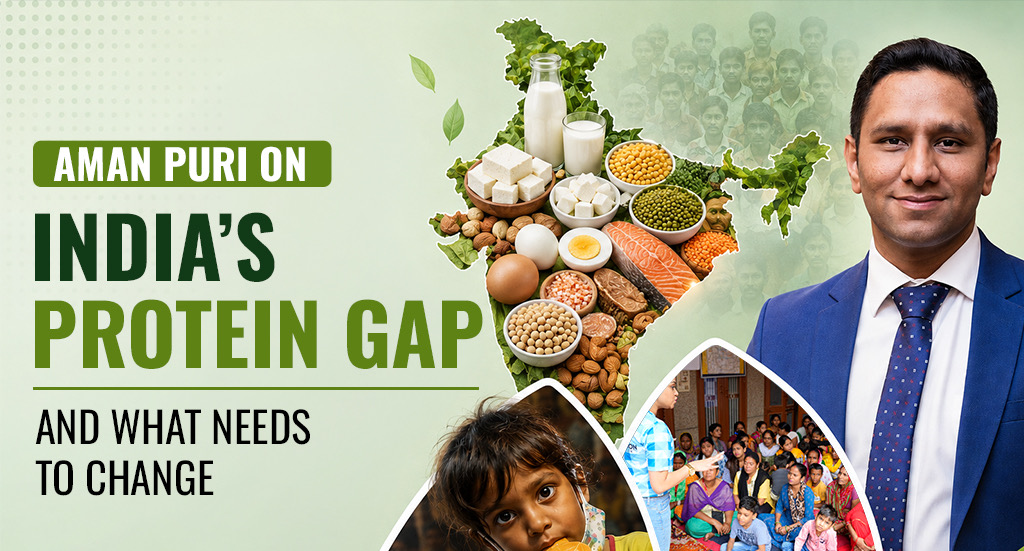
Aman Puri on India’s Protein Gap and What Needs to Change
Protein is currently the most discussed nutrient in India, and rightly so. Social media influencers, doctors, and nutritionists are all highlighting the importance of this essential nutrient. Once considered important only for bodybuilders looking to bulk up, protein’s role in muscle health, immunity, metabolism, and recovery is now becoming recognised. Yet, concerningly, India continues to remain a protein-deficient nation, with research studies and surveys establishing over 70% of Indians as deficient in this vital nutrient. While awareness of protein has grown considerably, this has not always translated into better protein consumption habits. Those who consciously try to increase their protein intake still rely on low-quality protein sources such as grains and refined flour.
India Is Waking Up to Protein, But Gaps Remain
An analysis by the Council on Energy, Environment and Water (CEEW) in 2025 revealed that half of all protein eaten in India now comes from grains such as rice, wheat, semolina, and refined flour. So while the average adult Indian is consuming about 55.6 g of protein, the quality and diversity of protein sources remain a concern since grains have a less favourable amino acid profile compared to high-quality protein sources such as milk, eggs, legumes, and fish.
Research studies conducted by the International Crops Research Institute for the Semi-Arid Tropics (ICRISAT), the International Food Policy Research Institute (IFPRI), and the Centre for Economic and Social Studies (CESS) have reported that most people in India’s semi-arid regions consume insufficient protein and rely on carbohydrate-rich diets. A survey conducted by the Indian Market Research Bureau in 2017 revealed that 73% of Indians are deficient in protein and that 90% are unaware of their daily protein requirements. Nine years later, the picture is changing, but significant gaps remain. A recent pan-India survey conducted by Local Circles and Country Delhi revealed that despite a rising awareness of the role of protein in maintaining health, nearly 60% of urban Indians were not eating sufficient protein-rich foods and nearly 74% were unaware of their daily protein needs.
From Protein Awareness to Protein Efficiency
This highlights an important distinction: India may be experiencing a protein-awareness revolution, but awareness alone is not enough. Knowing that protein is important does not necessarily mean knowing how much is required, which sources to choose, how to distribute intake through the day, or how protein requirements vary according to age, activity levels and individual needs.
According to the Indian Council of Medical Research, the recommended daily protein intake for an average sedentary Indian is 0.8 g/kg of body weight. Physically active individuals, fitness-conscious people, and the elderly require even higher amounts of protein. Sarcopenia or age-related loss of muscle mass is a prevalent problem among the older Indian population, and adequate protein intake is important in helping prevent and manage it.
Steadfast Nutrition founder Aman Puri believes that India does not simply need more conversations about protein. It needs better awareness of protein requirements and better protein consumption habits. For Aman Puri, India’s protein challenge is not simply about eating more protein. It is about understanding protein better, improving the quality and diversity of diets, making protein-rich foods and supplements more accessible, and changing the way Indians think about nutrition. The next step, in his view, is to move from protein awareness to protein efficiency.
Bringing Protein into the Mainstream Nutrition Conversation
Aman Puri, who envisions making India protein efficient by 2040, advocates awareness campaigns to educate people about how much protein they should consume every day and about symptoms of protein deficiency. The Steadfast Nutrition founder has led several campaigns and CSR activities to this end. His efforts have focused on taking the protein conversation beyond gyms and fitness communities and making it relevant to a wider section of society. He has educated people about various protein-rich foods and symptoms of protein deficiency. Steadfast Nutrition has distributed protein supplements free of cost among underprivileged members of society. Its nutritionists have held talks in schools and colleges, educating India’s youth about the importance of getting enough protein. Aman Puri has also used social media and partnered with several athletes and icons to amplify the reach of his campaigns.
These athletes, influencers, and actors associated with Steadfast Nutrition have helped amplify the message of Aman Puri’s campaigns far and wide, reaching millions of people. The campaigns have been covered by leading national media, including CNBC and Financial Express. Through articles published in leading media outlets, he has helped make protein a mainstream nutrition conversation, educating people not only about how much protein they need, but also where it can come from, how to distribute it through the day and how to make appropriate choices according to their age, activity level, dietary preferences and individual requirements.
Making Quality Protein More Accessible
As the founder of Steadfast Nutrition, Aman Puri has also developed a range of protein supplements to meet the nutritional needs of people from all walks of life and with varied levels of physical activity. These supplements have enabled thousands of people to improve their daily protein intake, especially when consuming sufficient quantities of protein through food alone has not been feasible. For Aman Puri, however, supplementation is one part of the solution rather than a substitute for a balanced and diverse diet.
Aman Puri’s vision of making India protein-efficient by 2040 is ultimately bigger than the growth of the protein supplement industry. It is about creating a culture in which people understand the role of protein, make informed dietary choices and recognise nutrition as a foundation of long-term health and fitness.
Protein Efficiency Needs to Become a Public-Health Priority
Aman Puri has identified protein efficiency as a central part of his broader vision for a fitter India. According to the Steadfast Nutrition founder, protein efficiency is a broader public-health and food-system issue, rather than simply a fitness trend. He is of the opinion that the government should focus not just on addressing micronutrient deficiencies in the country such as iron and vitamin B deficiencies but also give protein efficiency the attention it deserves by improving public awareness of protein requirements, making affordable protein-rich foods more accessible, distributing protein supplements free of cost among low-income and underserved communities, and including more protein-rich foods in school mid-day meals. He calls upon the government to focus not just on staple cereals such as wheat and rice but also on nutritious, protein-rich sources such as pulses, dairy, and eggs in Public Distribution System (PDS) schemes.
India has already taken an important step forward by recognising the importance of protein. The challenge now is to turn that growing awareness into better everyday choices. The protein revolution has begun. The next step is to make it meaningful, accessible and sustainable, and ultimately, to make India protein efficient by 2040.